
From Instagram: Early start in the Air China/Asiana lounge

Early start in the Air China/Asiana lounge

Early start in the Air China/Asiana lounge
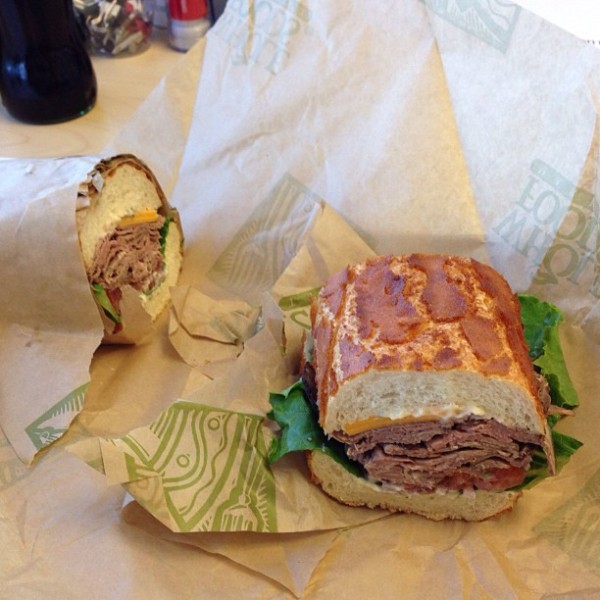
Test post using the pretty great Instagrabber plugin. The creator is cool too – I emailed him about a customization issue I had and he responded with the answer pretty quickly.
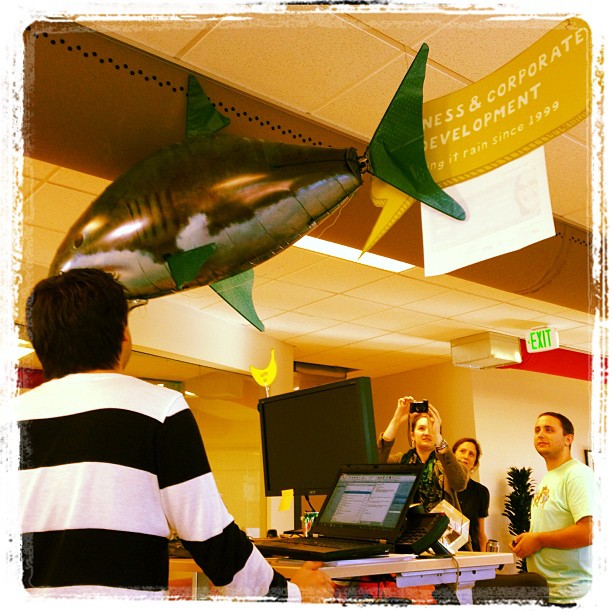
Yes, it’s a remote controlled floating shark
 (0)
(0)
(0)
(0) stuloh Behind the Scenes at Competitive Eating Contests (GQ) post.ly/9hwFB
stuloh The Luxury Repo Men (Businessweek) post.ly/9g1w1
(0)Palo Alto, only 45 minutes from San Francisco, is geographically in the middle of Silicon Valley. It’s also in the middle of suburbia. One natural side effect of this is that everything is dead in town by 9pm. Even on the weekends, California’s 2am last call laws (no alcohol served after 2am) means that things wind up pretty early compared to just about any other major city in the world.
Strangely, it reminds me a lot of Sydney, where everything also shuts early.
However, Sydney is not some podunk city. Sure you have the bars and clubs that open late, but outside of those haunts, there’s nothing but people roaming the streets looking for cabs and kebab joints. It’s missing the midnight mamak stalls of Malaysia, the bustling sidewalks of New York, and the never-closing stores of Hong Kong. Back in my uni days, during exam times, my flatmate and I would take a late night study break and head out to grab a bite. Unfortunately the pickings were slim – we were relegated to the 24 hour McDonald’s down the road, a kebab shop in Coogee, $3 bowls of Laksa at Star City Casino, Harry’s Cafe de Wheels in Woolloomooloo, and Pancakes on the Rocks. That was about it.
If this article in the SMH is anything to go by, this could now start to change:
The City of Sydney hopes to double the late-night economy’s annual turnover to $30 billion and increase after-hours jobs by 25 per cent by 2030. But, more than just economics, it is hoped that a vibrant late-night economy will mean more visitors, less alcohol-fuelled violence, an enhanced global reputation and inspired residents.
“It’s about more than whether you can get a latte beyond 11pm,” says Jess Scully, the director of Vivid Ideas. “It’s about the kind of lifestyle and city we want.” …
It would be an interesting experiment to add one thing to George Street at 11pm: open shops. Would party-goers change their behaviour? Would there be a different crowd on the footpaths? Retailers will potentially play a big part in the Sydney of the future, whether it be opening later or activating their shop fronts at night with creative lighting and pop-up events, but there are challenges.
Sydney has traditionally been a city of early risers, reflected in 9am-5pm operating hours, despite demand for shopping hours closer to Berlin’s (10am-8pm), or even our Asian neighbours, who shop until 11pm.
NSW Small Business Commissioner Yasmin King predicts that our complex system of late-night and weekend penalty rates for retail workers will hamper many shops from opening late and a review may be required. She says it will be difficult to source workers, compounded by a lack of transport options to get to and from work. The experience of some retailers, however, suggests it is possible. During Vivid, one ice-cream vendor sold twice as much at 11pm on a winter’s night as he would on a summer’s day.
On Crown Street in Surry Hills, nestled between grungy barbers, boutiques and bars, one bookshop, like many others in Sydney, stays open until 10pm on weekends. The store manager of Oscar & Friends, William Noble, says they have no trouble finding and funding staff to work nights, which is sometimes double the daytime trade. Most of the night workers use the network of bike lanes to ride to and from work. “The demand definitely makes it worth it,” he says. “We mostly get people browsing after dinner. It’s just a lovely vibe.”
Sydney’s a great city, but this is one big thing that it’s missing.
(0)The iPhone 5 is noticeably lighter and thinner, which is normally a good way to move for technology. But, to me it feels a little off:
Maybe it will grow on me, but I suspect not. Yes, #firstworldproblems.
I also have a ton of bitching I could do about AT&T and would’ve moved to Verizon had I not still had one of those grandfathered unlimited data plans from the 3G days. Biggest gripe is that I simply don’t understand why they don’t unlock phones that are on contract. You still gotta pay them each month, why do they care? So they can eke out a little bit of money if you decide to use international roaming?
(0)(Selina heads SurveyMonkey’s Product and Engineering team.)
stuloh Windows 8... what a disaster for a desktop OS.
Pete sent me a link to this article in the NY Times which takes a different stance to the “find your passion” school of thought.
If we have the courage to discover this calling and to match it to our livelihood, the thinking goes, we’ll end up happy. If we lack this courage, we’ll end up bored and unfulfilled — or, worse, in law school.
Hah. The article then goes on to say:
As I considered my options during my senior year of college, I knew all about this Cult of Passion and its demands. But I chose to ignore it. The alternative career philosophy that drove me is based on this simple premise: The traits that lead people to love their work are general and have little to do with a job’s specifics. These traits include a sense of autonomy and the feeling that you’re good at what you do and are having an impact on the world. Decades of research on workplace motivation back this up. (Daniel Pink’s book “Drive” offers a nice summary of this literature.)
These traits can be found in many jobs, but they have to be earned. Building valuable skills is hard and takes time. For someone in a new position, the right question is not, “What is this job offering me?” but, instead, “What am I offering this job?”
The author, a CS prof at Georgetown, tries to divorce “a job’s specifics” from whether people love their work. However, two of the things he then goes on to list in the very next sentence – sense of autonomy and having an impact on the world – are inextricably tied with a job’s specifics. Foxconn factory line workers put in long hours and some are doubtless really good at their jobs. But try and find autonomy and world-changing qualities to that job, and it’s blood from a stone.
I kind of see what he’s getting at, although he’s not really saying it explicitly – it’s a commitment issue with our generation. Employment mobility is really high, and it’s more common than not for Gen Ys to skip through 3-4 jobs over the course of a decade. Sometimes it takes time to grow into a job, so people need to give themselves enough chance to skill up – once you know how to do things, things usually do get better. But some jobs require years and years to skill up, and what happens if you get 6 or 7 years down that path and the passion doesn’t arrive?
(0)I recently returned from a 10 day whirlwind trip to Europe, visiting London, Tel Aviv, Haifa, Duesseldorf, Cologne, Fuessen, Liechtenstein, Varenna and passing through Koblenz, Frankfurt, Munich, Switzerland and Austria. The trip was centered around a wedding in Tel Aviv, and another in Varenna (a town on Lake Como, Italy).
I flew into Cologne, took a train to Duesseldorf and stayed with a friend there. I have always wanted to drive in Germany, so I rented a nice car in Duesseldorf (a diesel which gave me about 900km on one tank of petrol!) As luck would have it, my friend needed to be in Frankfurt for business on the day I was leaving Duesseldorf, so we drove down together, stopping at the Deutsches Eck along the way. I dropped him off in Frankfurt and continued south.
When there’s no traffic jam, German autobahns are fun to drive. They are famed for having lengthy stretches with no speed limits. Despite this, German drivers are incredibly well behaved and predictable. Almost religiously, they keep left except when overtaking. The result is that you pretty much can drive as fast as you want. People in the right lane tend to travel at about 100-130kph, and people in the left lane can go anywhere from 120 to well over 200kph. At those velocities, you need to concentrate and put a bit of thought into driving (lest you rear-end someone at catastrophic speeds), so it keeps things interesting. That, and a great soundtrack, made for a memorable road trip.
The highlight of the drive was not in Germany, however. I drove all the way down to Italy, and on the return journey decided to cross over into Austria via the Stelvio Pass. It’s a pretty spectacular road which snakes between snow-capped Alpine mountain peaks through over 60 hairpin turns. Cars share the road with suicidal motorcyclists and hard core bicyclists (respect). I’ll let this video I took do the rest of the talking:
| 31 days spent in current location | |
| Previously | San Diego, CA |
| » Currently | San Francisco, CA (29/1/26 5:57am) |
| In 11 days | San Diego, CA |
| In 14 days | San Francisco, CA (End) |
| View full itinerary... | |


 11:37am